
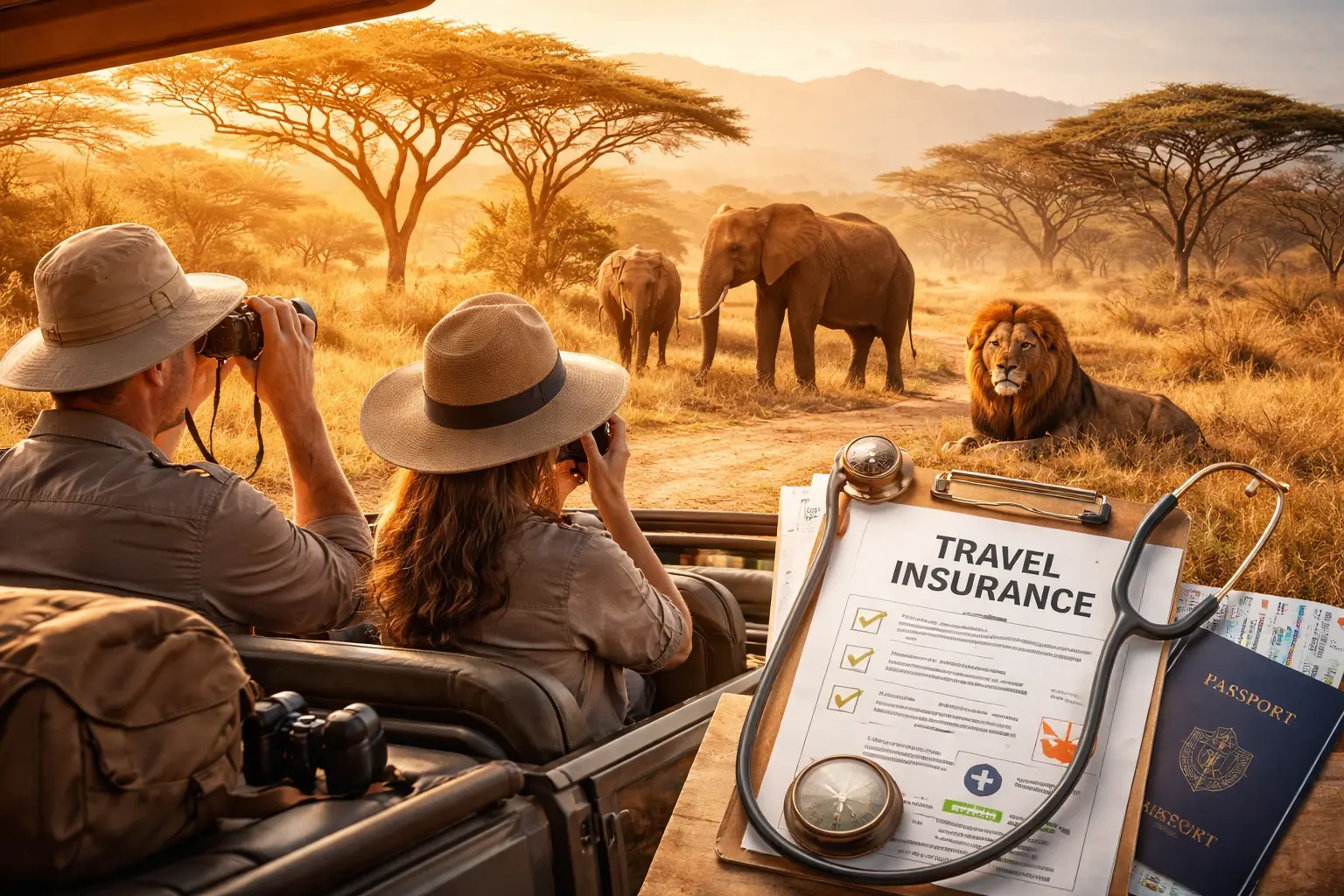
An African safari is not just a vacation. It is a dream you may have carried for years. You picture yourself watching elephants move slowly across the savannah, hearing lions roar in the distance at night, and feeling completely immersed in nature in a way few destinations can offer. But while the magic of Africa is unforgettable, safari travel also comes with realities that are very different from a typical beach holiday or city break.
Remote locations, limited medical facilities, long travel distances, wildlife encounters, and unpredictable conditions mean that preparation matters. This is where african safari travel insurance becomes not just useful, but essential. When something goes wrong far from home, the right coverage can protect your health, your finances, and your peace of mind.
This guide walks you through everything you need to know, step by step, so you can enjoy your safari with confidence instead of worry.
Table of Contents
Why African Safari Travel Insurance Is More Than Just a Policy
When you book an African safari, you are investing more than money. You are investing time, excitement, and emotional energy into what may be a once-in-a-lifetime experience. Unlike conventional travel, safaris often take place in isolated national parks, far from major cities and modern hospitals. Even a minor issue can quickly become complicated if you are not properly insured.
You may assume your regular travel insurance is enough. Many travelers do. Unfortunately, that assumption often leads to costly surprises. Standard policies frequently exclude adventure activities, limit medical evacuation coverage, or fail to cover high-value safari tours.
African safari travel insurance is designed specifically to address these gaps. It acknowledges the unique risks of safari travel and ensures that if something unexpected happens, you are not left handling it alone.
What Is African Safari Travel Insurance?
Understanding African Safari Travel Insurance
African safari travel insurance is a specialized type of travel insurance created for travelers visiting African countries, particularly for safari-based trips. It combines traditional travel insurance benefits with coverage tailored for remote travel, wildlife activities, and medical evacuation.
Unlike basic policies, african safari travel insurance often includes:
- Higher medical coverage limits
- Emergency evacuation from remote locations
- Protection for safari activities
- Coverage for expensive prepaid tours
This type of insurance is not about fear. It is about preparation.
Who Needs African Safari Travel Insurance?
If you are traveling on safari, chances are you need it. This includes:
- First-time safari travelers unfamiliar with local conditions
- Couples on luxury safaris with high trip costs
- Families traveling with children
- Senior travelers who may face higher medical risks
- Wildlife photographers carrying expensive gear
- Budget travelers visiting multiple remote regions
No matter your travel style, safari insurance adapts to your needs.
Why Standard Travel Insurance Is Not Enough for an African Safari
Unique Risks of African Safari Travel
African safaris take you far beyond typical tourist infrastructure. Many lodges are hours away from the nearest town. Roads may be unpaved. Communication can be limited. While safari operators prioritize safety, risks still exist.
Common safari-specific risks include:
- Accidents during game drives
- Illness in remote areas
- Limited access to hospitals
- Delayed or canceled bush flights
- Political or weather-related disruptions
- Lost or damaged specialized equipment
These are not everyday travel risks, and they require specialized protection.
Coverage Gaps in Regular Travel Insurance
Standard travel insurance often falls short in safari environments. Many policies:
- Exclude adventure activities such as game drives or bush walks
- Offer minimal emergency evacuation coverage
- Limit medical coverage to low amounts
- Do not cover remote transportation costs
Without african safari travel insurance, you could face thousands of dollars in out-of-pocket expenses.
Essential Coverage You Need in African Safari Travel Insurance
Emergency Medical Coverage
Medical care in Africa varies widely by country and region. In major cities, facilities may be excellent. In safari areas, however, medical care is often basic or unavailable.
Your policy should include:
- High medical coverage limits (at least $100,000)
- Coverage for hospitalization and treatment
- Protection for tropical illnesses and injuries
Medical emergencies abroad can be expensive, especially when private care is required.
Medical Evacuation and Repatriation
This is one of the most important components of african safari travel insurance.
If you become seriously ill or injured, you may need:
- Helicopter evacuation from a national park
- Air ambulance to a regional hospital
- Transport back to your home country
These services can cost tens of thousands of dollars without insurance.
Trip Cancellation and Interruption Coverage
Safari trips are often booked months in advance and paid upfront. If you must cancel or cut your trip short due to illness, injury, or unforeseen events, cancellation coverage protects your investment.
This coverage typically includes:
- Non-refundable safari tours
- Flights and accommodations
- Emergency interruptions
Baggage and Personal Belongings Protection
Safari travelers often carry specialized gear, including cameras, lenses, binoculars, and outdoor equipment.
Your insurance should cover:
- Lost or delayed luggage
- Damaged equipment
- Theft during transit
Some policies allow you to add extra coverage for high-value items.
Adventure and Wildlife Activity Coverage
Safari activities are often considered adventure travel. Make sure your policy explicitly covers:
- Game drives
- Guided bush walks
- Hot air balloon safaris
- Boat safaris
Without this coverage, claims related to these activities may be denied.
African Safari Travel Insurance Coverage Table
| Coverage Type | Why It Matters on Safari | Recommended Level |
|---|---|---|
| Emergency Medical | Limited local healthcare | $100,000+ |
| Medical Evacuation | Remote locations | $250,000+ |
| Trip Cancellation | High prepaid costs | Full trip value |
| Baggage Protection | Expensive gear | $1,500–$3,000 |
| Safari Activities | Adventure exclusions | Must be included |
Tables like this help you quickly compare policies and avoid under-insurance.
How to Choose the Best African Safari Travel Insurance
Key Factors to Consider
When selecting african safari travel insurance, look beyond price. Focus on value and protection.
Key factors include:
- Coverage limits suitable for remote travel
- Inclusion of safari and adventure activities
- Clear evacuation benefits
- 24/7 emergency assistance
- Strong customer support reputation
Questions You Should Ask Before Buying
Before purchasing, ask yourself:
- Does this policy cover evacuation from national parks?
- Are safari activities clearly included?
- What exclusions apply?
- Is coverage valid in all countries I plan to visit?
Taking time to read the policy details can prevent disappointment later.
Common Mistakes Travelers Make When Buying African Safari Travel Insurance
Many travelers make avoidable mistakes that reduce their protection.
Mistake 1: Choosing the Cheapest Policy
Low-cost plans often come with low coverage limits and major exclusions.
Mistake 2: Ignoring the Fine Print
Exclusions for adventure activities or remote areas can invalidate your coverage.
Mistake 3: Underestimating Medical Evacuation Costs
Evacuation is expensive, and insufficient coverage can leave you financially exposed.
Mistake 4: Waiting Too Long to Buy
Buying early protects you against cancellation risks from the moment you book.
Real-Life Scenarios Where African Safari Travel Insurance Makes a Difference
Imagine slipping while stepping out of a safari vehicle and needing medical treatment. Or developing a serious infection far from the nearest hospital. Or having your safari canceled due to severe weather.
In these moments, african safari travel insurance:
- Arranges emergency transport
- Covers hospital expenses
- Reimburses canceled tours
- Coordinates care when you are stressed and vulnerable
These are not hypothetical situations. They happen every year to travelers who assumed they would be fine.
Conclusion:
An African safari is one of the most extraordinary experiences you can have. It deserves careful planning and thoughtful preparation. While you cannot control every outcome, you can control how well protected you are when the unexpected happens.
African safari travel insurance is not an extra expense. It is a safeguard for your health, your investment, and your peace of mind. With the right coverage, you can focus on the wonder of the journey instead of worrying about what might go wrong.
FAQ : About African Safari Travel Insurance
Is african safari travel insurance mandatory?
It is not always legally required, but it is strongly recommended due to the nature of safari travel.
What does african safari travel insurance usually cover?
It typically covers medical emergencies, evacuation, trip cancellation, baggage, and safari activities.
How much does african safari travel insurance cost?
Costs depend on your age, trip length, destination, and coverage level, but it is usually a small percentage of your total trip cost.
Does african safari travel insurance cover wildlife encounters?
Yes, if injuries occur during covered safari activities and are not excluded by the policy.
When should you buy african safari travel insurance?
Ideally, immediately after booking your safari to maximize coverage benefits.